

Why Stress Management is Important
Table of Contents
You Already Know How Stress Feels
The feelings are familiar in the tightness across your neck and shoulders. When your thoughts race at 2 a.m. and sleep never comes, the feelings of stress are there. You sense it in the short temper you never had before. Stress affects your life, regardless of significance. No matter how large or small, stress arrives.

The American Institute of Stress reports that about 77% of people regularly experience physical symptoms caused by stress. That number tells you something important. Stress is not a personal struggle. It is something nearly everyone faces. The good news is that managing stress is a skill you can learn, and it can change your life for the better. [1]
This article walks you through the many ways stress affects your body, your mind, your emotions, and your relationships. More importantly, it shows you why taking control of stress is one of the most valuable things you will ever do for yourself.
What Stress Does To Your Body
Your body has a built-in alarm system. When you face a threat, whether it is a real danger or a work deadline, your body releases hormones like cortisol and adrenaline. Your heart beats faster, muscles tense up. Your breathing quickens. This is your body’s “fight or flight” response, and its purpose is to protect you. [2]

The problem starts when that alarm never fully shuts off. When stress sticks around for weeks or months, your body stays in a state of alert. Over time, your body wears down. Researchers have linked chronic stress to high blood pressure, heart disease, a weakened immune system, headaches, stomach problems, and muscle pain. With all these parts of your body seeking your attention, you might find that you get sick more often than usual, or the nagging aches never seem to go away. [2, 3]
Stress also disrupts your sleep. As a fitful night passes, true restful sleep eludes you. Poor sleep makes everything harder. A new day starts with your body feeling weaker and your mind left foggy. Night after night with poor rest creates a cycle that is tough to break. When you're not fully rested and aware, you increase the chances of an accident. [3]
Stress and Your Relationships
Stress rarely stays in one place. It’s like a wave that spills over to the people you interact with. Stress may cause you to pull away from family and friends. You might cancel plans, avoid phone calls, or isolate yourself because you feel too drained to connect with anyone.

Conversely, stress can make you reactive and snap at your spouse, lose patience with your children, or say things you later regret. When in a reactive stress mode, it becomes difficult to listen, to be present, or show the kindness that your relationships need. Studies from the American Psychological Association show that stress is one of the top causes of conflict in families and marriages. [4, 6]
Your relationships matter, and they are one of the greatest sources of support and joy in your life. When stress pulls you away from the people who care about you, it takes away the very thing you need to help you heal.
Stress in Your Work and Daily Life
If you are in the workforce, you spend the bulk of each day on the job, and your stress follows you there. Work-related stress affects your focus, your motivation, and your ability to perform well. As stress reaches out into the various parts of your life, mistakes that were uncommon for you now occur more often. Tasks you once accomplished with ease now feel difficult. Workplace stress erodes happiness and self-assurance, leading to a life of just going through the motions without a sense of purpose. [7]

As stress grows in your life, it begins to over-write your daily routines. Healthy habits like cooking good meals, exercising, and doing things you enjoy take over. It becomes easy to seek quick fixes like fast food, too much screen time, smoking, alcohol, or extra caffeine. When shortcuts become a habit to focus away from stress, they take away the joy, interaction, and direction that can help your health and get you back on track. [3]
Stress-related health problems drive up medical costs and lost workdays. The World Health Organization estimates that depression and anxiety, both closely tied to chronic stress, cost the global economy $1 trillion per year in lost productivity. Taking care of your stress is not just good for your health. It is good for your wallet and your career. [7]
Why Managing Stress Is One of the Best Things You Can Do
In this article, we saw what stress is and the health impact. It is not a comfortable story, is it? No. Yet, knowing the cost helps you see the value of stress management. When you learn to handle stress well, the benefits show up everywhere. Imagine a body that feels better, clear thinking, steady emotions, improved relationships, and work that feels manageable. Focusing on stress management rather that stress effects can turn the tide of your health and life.

Research consistently shows that people who practice regular stress management have lower blood pressure, stronger immune systems, better sleep, and a reduced risk of heart disease. They also report feeling happier, more confident, and more in control of their lives. [2, 3]
Stress management is not about removing every source of stress from your life. That is unrealistic. Building skills and habits helps you respond to stress in healthier ways. People have done this for generations through prayer, hard work, time outdoors, strong family bonds, and taking things one day at a time. These time-tested approaches still work.
Simple Ways to Start Managing Stress Today
You do not need a complicated plan to start managing stress. Small, consistent steps make a real difference. Here are some proven approaches that people have relied on for a long time.

✅ Move your body every day. Physical activity is one of the most effective stress relievers available to you. A 30-minute walk, stretching, or working in the yard gives your body a way to burn off stress hormones and release feel-good chemicals called endorphins. People have always known that hard work and movement clear the mind. [8]
✅ Talk to someone you trust. Sharing what you are going through with a friend, family member, or counselor takes weight off your shoulders. You were not meant to carry everything alone. Strong communities and close families have always been the backbone of good mental health.
✅ Get enough sleep. Your body repairs itself during sleep, and your brain processes the emotions of the day. Set a regular bedtime, put away your phone or tablet an hour before bed, and give your body the rest it deserves.
✅ Spend time on things that bring you peace. Whether it is reading, fishing, gardening, attending church, or sitting on the porch with a cup of coffee, make room for the simple pleasures that restore your spirit. These are not luxuries. They are necessities. [8]
✅ Learn to say no. You cannot do everything, and you do not have to. Protecting your time and energy is not selfish. It is wise. Setting boundaries is one of the most practical stress management tools you have.
✅ Practice deep breathing. When stress hits, take a few slow, deep breaths. Breathe in through your nose for four counts, hold for four counts, and breathe out through your mouth for four counts. This simple technique calms your nervous system in minutes.
You Deserve to Feel Better
Stress is a part of life, but it does not have to run your life. You have the power to make changes, even small ones, that protect your health, strengthen your mind, and bring more peace to your days.

The fact that you are reading this article says something about you. You care about your well-being. You want things to be better. That matters, and it is a great place to start. You are worth the effort it takes to manage stress, and the people in your life will benefit too.
Take one step today. Pick one thing from this article and try it. You do not have to fix everything at once. Just start somewhere. Trust that each small step moves you toward a healthier, more peaceful life.
Ready to Take the Next Step?
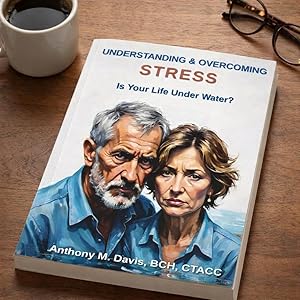
You have already taken an important step by learning how stress affects your body, mind, and life. If you are ready to go deeper, the book Understanding & Overcoming Stress: Is Your Life Under Water?

The popular stress management resource was written with you in mind. This resource offers practical, proven strategies guiding you to understand stress, regain control, and begin experiencing greater peace and confidence.
You deserve a life that is not weighed down by stress, and this book can help you get there.
Get your copy of Understanding & Overcoming Stress: Is Your Life Under Water?
If you find this information useful, please subscribe now and let me know what kinds of material like to see here.
References
[1] American Institute of Stress. (2022). Stress statistics. American Institute of Stress. https://www.stress.org/
[2] Mayo Clinic. (2023). Stress symptoms: Effects on your body and behavior. Mayo Clinic. https://www.mayoclinic.org/healthy-lifestyle/stress-management/in-depth/stress-symptoms/art-20050987
[3] American Psychological Association. (2023). Stress effects on the body. American Psychological Association. https://www.apa.org/topics/stress/body
[4] American Psychological Association. (2022). Stress in America 2022: Concerned for the future, beset by inflation. American Psychological Association.
https://www.apa.org/news/press/releases/stress/
[5] National Institute of Mental Health. (2023). 5 things you should know about stress. National Institute of Mental Health.
https://www.nimh.nih.gov/health/publications/stress
[6] Randall, A. K., & Bodenmann, G. (2009). The role of stress on close relationships and marital satisfaction. Clinical Psychology Review, 29(2), 105-115.
[7] World Health Organization. (2022). Mental health at work. World Health Organization. https://www.who.int/news-room/fact-sheets/detail/mental-health-at-work
[8] Harvard Health Publishing. (2021). Exercising to relax. Harvard Medical School. https://www.health.harvard.edu/staying-healthy/exercising-to-relax



Comments (0)