

How Stress Affects Your Mental Health
Table of Contents
You already know that stress doesn’t feel good. But did you know it can change the way your mind works? Stress does more than make you feel tense or tired. It reaches into your thoughts, your emotions, and even your relationships. When stress sticks around too long, it can negatively affect your mental health.
If you’ve been feeling overwhelmed, feeling anxious, or just not like yourself, you are not alone. Countless people experience these feelings each day from stress. The good news is that understanding how stress affects your mind gives you the power to do something about it. This article helps you see the connection between stress and mental health so you can start taking better care of yourself.
What Happens in Your Brain When Stress Takes Over

Your brain has a built-in alarm system. In earlier articles, we looked at how your brain sends out stress hormones when you perceive danger. These chemicals prepare your body to fight or run away. Scientists call this the “fight-or-flight” response, and it has kept human beings safe for thousands of years. [1]
The problem is that your brain cannot tell the difference between an actual threat and everyday worries. A tight work deadline, money troubles, or a family argument can trigger the same alarm as a bear chasing you through the woods. When this alarm keeps going off day after day, your brain stays flooded with stress hormones. Over time, too much cortisol can shrink parts of your brain that help with memory and decision-making. We’ve heard about the “fight or flight” response so many times that it can seem like a new sense of “abnormal” we carry around. [1, 2]
How Stress Changes the Way You Think
Have you ever noticed that you don’t think clearly when you’re stressed? What you’re experiencing isn’t just in your mind. Stress affects the prefrontal cortex, the part of your brain responsible for planning, focus, and making good choices. When stress hormones flood this area, your ability to concentrate drops. You may forget things more often. You might even struggle to make simple decisions. [3]
Ongoing stress also creates negative thought patterns. You may start expecting the worst in every situation. You might blame yourself for things that are out of your control. These thinking habits can become automatic over time, and they make it harder to see things clearly. [3, 4]
If you’ve noticed your thinking feels foggy or negative lately, stress may be the reason. Recognizing this pattern is the first step toward changing it. Recognizing is important. Taking action is the goal.

The Emotional Weight of Ongoing Stress
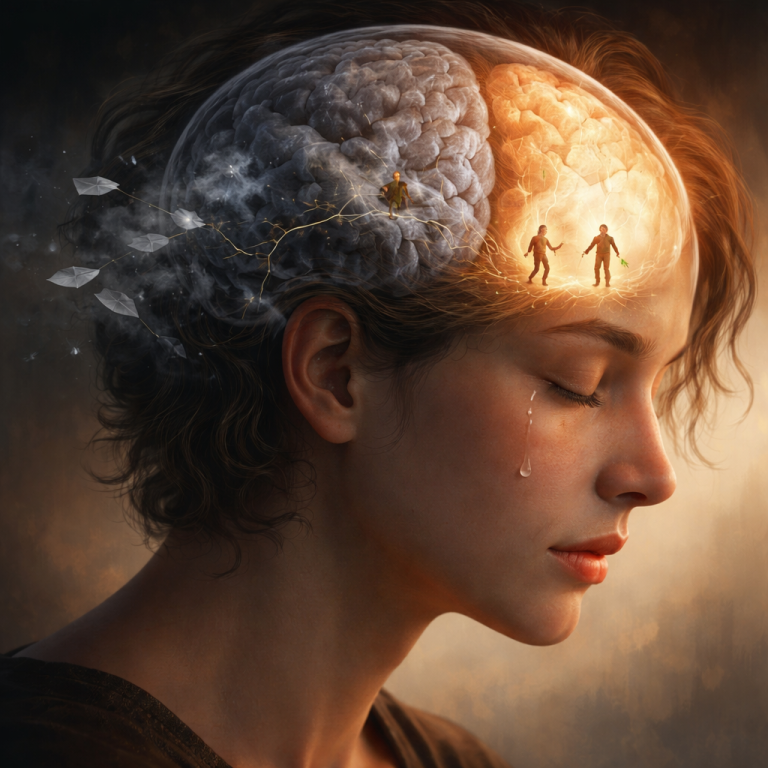
Stress doesn’t just affect your thinking. It also hits your emotions. When you live under constant pressure, you may feel irritable, sad, or emotionally drained. Small things that never bothered you before can suddenly feel like a big deal. You might snap at people you love or feel like crying for no apparent reason. [5]
This emotional toll builds up. Many people describe it as feeling “burned out” or “running on empty.” Your patience is wearing thin. Your ability to enjoy the things you used to love fades. Some people feel numb, as if their emotions have shut down altogether. [5, 6]
These emotional changes are your body’s way of telling you that something needs to change. You deserve to feel whole, not hollowed out by pressure you never asked for.
When Stress Turns Into Anxiety and Depression
One of the most serious ways stress affects mental health is by opening the door to anxiety disorders and depression. Research shows that people who experience ongoing stress often develop these conditions. Chronic stress changes the balance of serotonin and dopamine in the brain, which help regulate your mood. Imbalances in these chemicals invite anxiety and depression. [4, 7]
The anxious feelings might show up as constant worry, racing thoughts, or a feeling of dread that won’t go away. Depression might look like losing interest in things you once enjoyed, pulling away from friends and family, or struggling to get out of bed in the morning. These are not signs of weakness. These signal prolonged, excessive strain on your mind and body. [7]
If any of this sounds familiar, please know that help is available. Talking to a counselor, a doctor, or even a trusted friend is a brave and worthwhile step.

How Stress Affects Your Relationships

Stress doesn’t stay inside your own head. It spills over into the way you treat the people around you. When you are stressed, you may become short-tempered, withdrawn, or distracted. You might misread what others say or overreact to small disagreements. Over time, this puts strain on your friendships, your marriage, and your family connections. [8]
Your loved ones may not understand why you seem distant or angry. You might not realize yourself how much your stress is changing the way you interact with them. This creates a painful cycle. Stress damages relationships, and damaged relationships create more stress. [8]
Breaking this cycle starts with honest communication. Letting the people in your life know what you’re going through gives them a chance to support you instead of pulling away.
Steps You Can Take to Protect Your Mental Health
You have more control over stress than you might think. Here are some practical steps that can help you protect your mental health and start feeling like yourself again.
✅ Move your body. Physical activity lowers cortisol and boosts mood-lifting chemicals in your brain. Even a short daily walk or a few minutes on an exercise bike makes a difference. [9]
✅ Talk about what you’re feeling. Holding everything inside only adds to the pressure. Share your struggles with someone you trust, whether a friend, a family member, or a professional counselor.
✅ Set boundaries. You have the right to say no. Protecting your time and energy is not selfish. It is necessary.
✅ Build a routine. Predictability gives your brain a sense of safety. Regular sleep, meals, and downtime help your nervous system calm down. [9]
✅ Limit news and social media. Constant information overload keeps your stress response active. Give yourself permission to step away from the screen.
✅ Seek professional help when you need it. There is no shame in asking for support. A trained counselor or therapist can give you tools that work for your specific situation. [9]
You matter. Your peace of mind matters, and taking even one small step today is a victory worth celebrating.

Take the Next Step
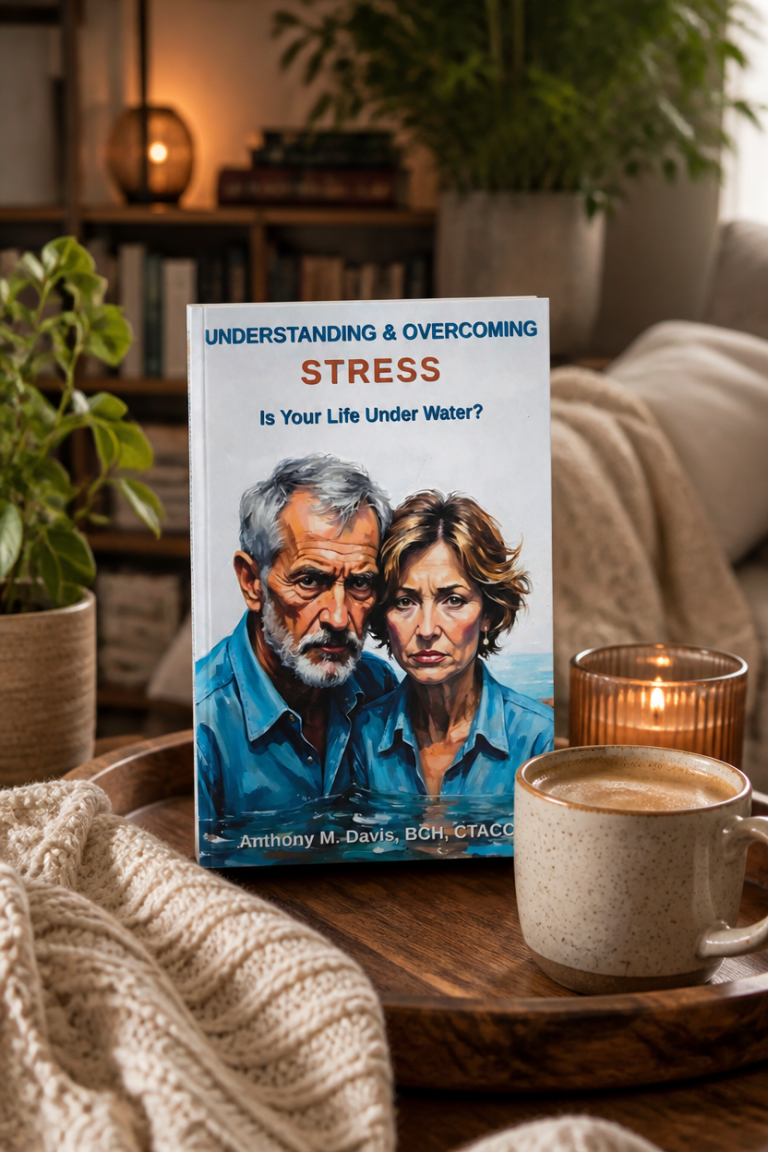
If this article spoke to you, your journey doesn’t have to stop here. The book Understanding & Overcoming Stress: Is Your Life Under Water? The book is for people just like you, real people facing actual pressure who want genuine answers. This book walks you through the causes of stress and the effects of disappointment. The book offers effective tips on finding the causes of stress, and how to manage and rise above it. You deserve to live in peace, not under pressure. Get your copy of Understanding & Overcoming Stress: Is Your Life Under Water? today and start building the good life that brings you joy and purpose.
If you find this information useful, please subscribe now and let me know what kinds of material like to see here.
References
[1] McEwen, B. S. (2007). Physiology and neurobiology of stress and adaptation: Central role of the brain. Physiological Reviews, 87(3), 873–904. https://doi.org/10.1152/physrev.00041.2006
[2] Lupien, S. J., McEwen, B. S., Gunnar, M. R., & Heim, C. (2009). Effects of stress throughout the lifespan on the brain, behaviour and cognition. Nature Reviews Neuroscience, 10(6), 434–445. https://doi.org/10.1038/nrn2639 [3] Arnsten, A. F. T. (2009). Stress signalling pathways that impair prefrontal cortex structure and function. Nature Reviews Neuroscience, 10(6), 410–422. https://doi.org/10.1038/nrn2648 [4] Hammen, C. (2005). Stress and depression. Annual Review of Clinical Psychology, 1(1), 293–319. https://doi.org/10.1146/annurev.clinpsy.1.102803.143938 [5] Maslach, C., & Leiter, M. P. (2016). Understanding the burnout experience: Recent research and its implications for psychiatry. World Psychiatry, 15(2), 103–111. https://doi.org/10.1002/wps.20311 [6] Segal, Z. V., Williams, J. M. G., & Teasdale, J. D. (2013). Mindfulness-based cognitive therapy for depression (2nd ed.). Guilford Press. [7] Cohen, S., Janicki-Deverts, D., & Miller, G. E. (2007). Psychological stress and disease. JAMA, 298(14), 1685–1687. https://doi.org/10.1001/jama.298.14.1685 [8] Randall, A. K., & Bodenmann, G. (2009). The role of stress on close relationships and marital satisfaction. Clinical Psychology Review, 29(2), 105–115. https://doi.org/10.1016/j.cpr.2008.10.004 [9] Sharma, A., Madaan, V., & Petty, F. D. (2006). Exercise for mental health. Primary Care Companion to the Journal of Clinical Psychiatry, 8(2), 106. https://doi.org/10.4088/pcc.v08n0208a


Comments (0)